Hi, I'm Chen Edri, a Senior Product Designer
specializing in SaaS and complex systems.
Designing Transparency in AI
The journey to make Root's autonomous AI more transparent focused on transforming complex autonomous processes into experiences users could understand and trust.
I designed interfaces that visualized how AI agents researched, patched, validated, and delivered fixes, helping users understand what was happening behind the scenes without exposing unnecessary technical complexity.
🏙️ Company: root.io
🗓️ Project date: 2026
🖥 project type: Desktop, b2b SaaS app
👩 my role: Sole product designer


Project summary:
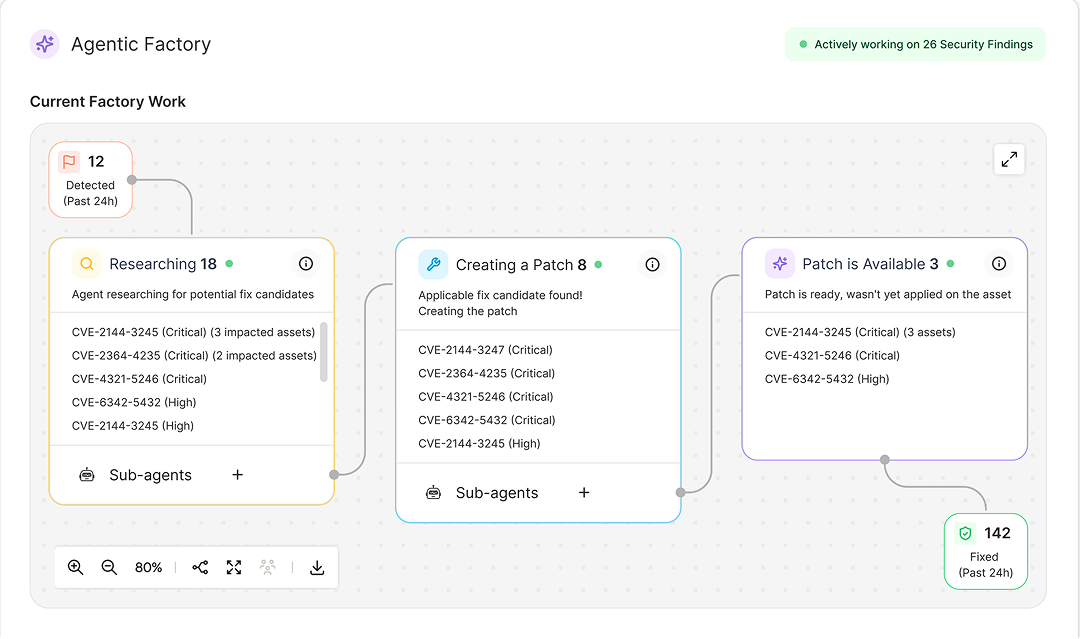
Turning Root's autonomous AI from a black box into an experience users could understand and trust meant making every AI decision visible. Originally created as an internal Sales demo, the feature evolved into a core product experience used in customer demos, marketing, and conferences.
The challenge:
The challenge with autonomous AI is building trust through transparency. Rather than exposing technical complexity, the experience needed to clearly communicate what the AI was doing, why it made each decision, and what happened next.
Started as an internal prototype. Shipped as a core customer experience.
Users track security issues, review secured assets, and see AI's vulnerability fixes.
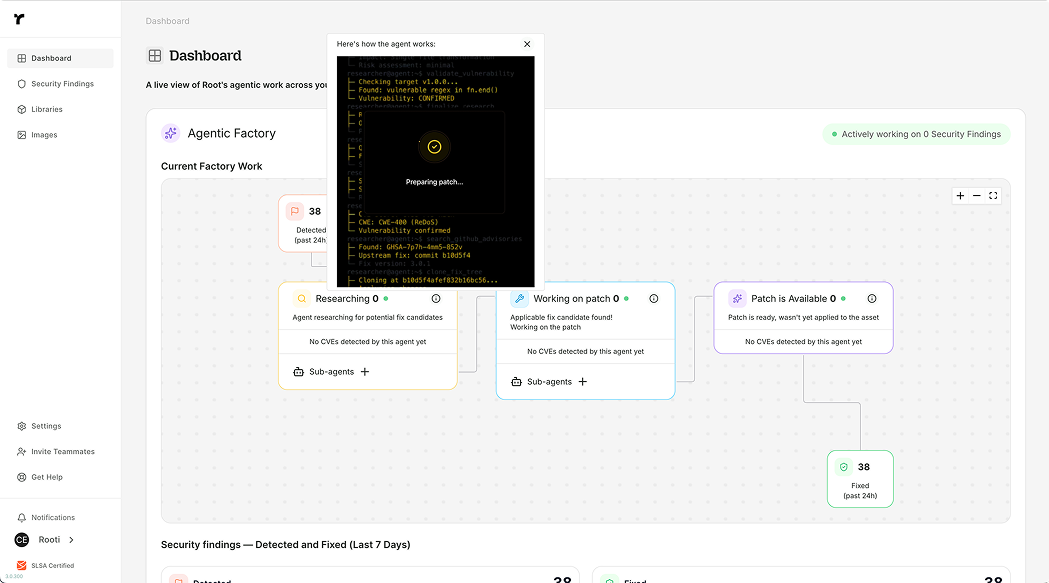
Agentic Factory Dashboard
From Sales Prototypeto
AI Platform
Originally built as an internal Sales demo to explain autonomous AI, the prototype quickly gained traction across the company. Within months, it evolved into a customer-facing experience powered by real production data, before expanding into Root's AI Factory dashboard - while continuing to support Sales demos.
Internal Sales Demo → Customer CVE Experience → AI Factory Dashboard
.gif)
Understanding the Problem
Understanding the System
Before designing, I needed to understand how Root's autonomous AI worked - not just what it produced, but how autonomous agents collaborated to reach decisions.
I worked closely with AI engineers, product managers, Sales, and Customer Success to map the entire remediation pipeline.
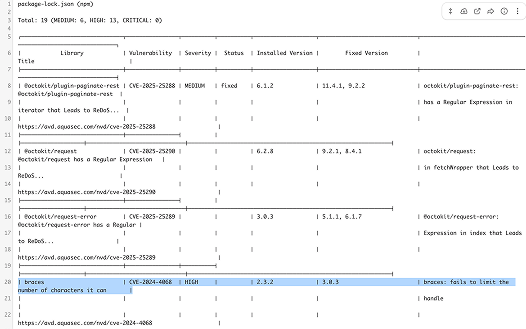
I delved into the system's workings by examining terminal outputs, JSON responses, agent orchestration, internal architecture, and end-to-end remediation flows.
How it works
This research gave me the mental model I needed to translate a complex AI system into an experience customers could actually understand.
Alongside learning the system, I studied how customers experienced autonomous AI through live demos, analytics, session recordings,and customer conversations.
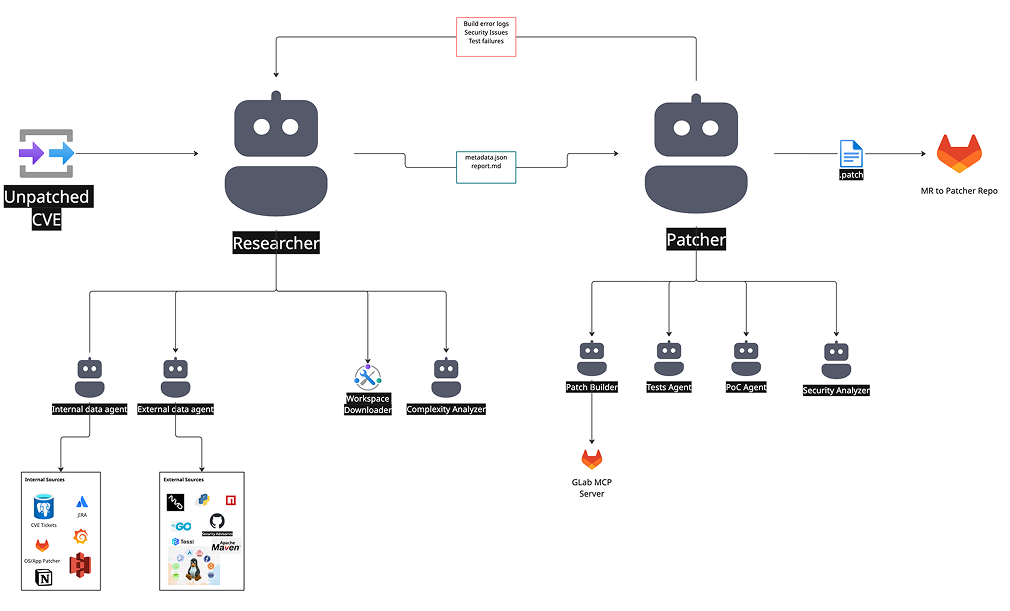
AI orchestration map
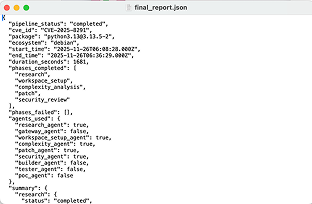
Agent outputs
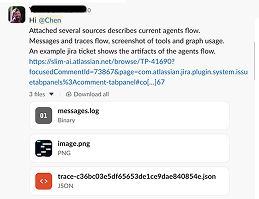
Collaboration with AI engineers
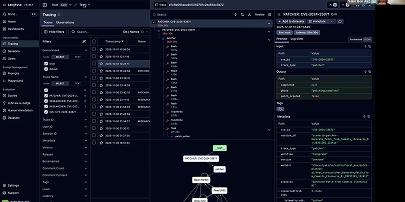
Internal patching tools
Research Insights
Alongside learning the system, I studied how customers experienced autonomous AI through live demos, analytics, session recordings,and customer conversations.
Across every research method, the same pattern emerged:
- Users trusted the results, but not the process.
- Sales spent valuable demo time explaining what the AI was doing.
- Customers wanted visibility - not another dashboard.
- Transparency itself had become part of the product experience.
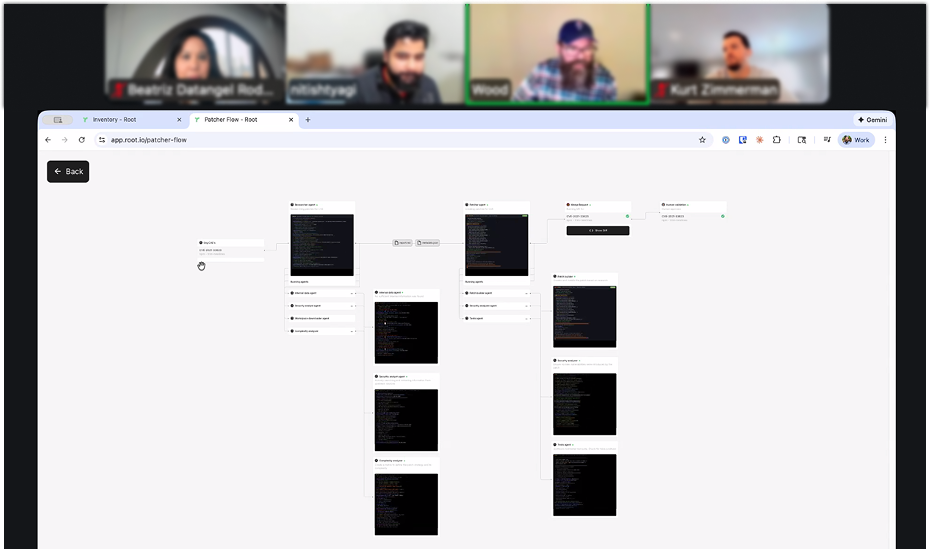
Live customer demo used to observe questions, confusion, and interaction patterns.
Exploring Solutions
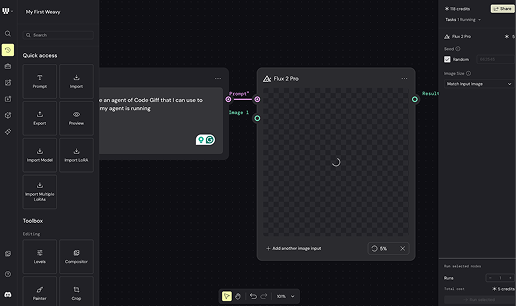
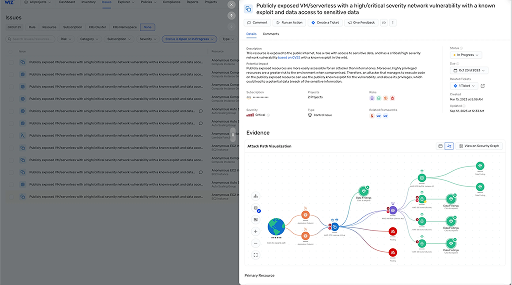
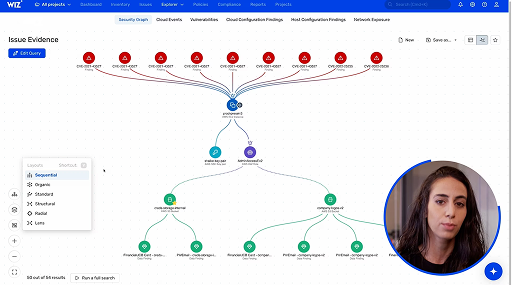
I explored interaction patterns from AI platforms, workflow builders, and graph-based interfaces to find a visual language for autonomous AI.
🔑 Key insight: People understand autonomous systems better when they can follow a live workflow instead of interpreting technical outputs.
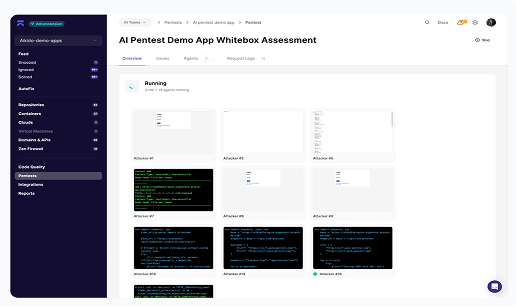
AI Interfaces
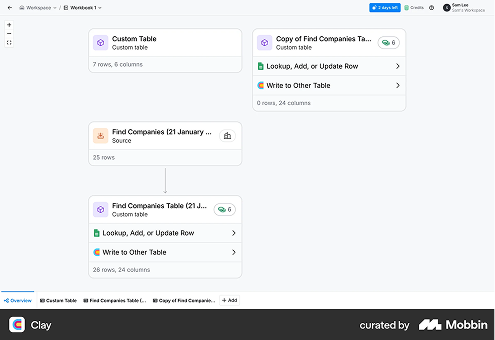
Workflow Patterns
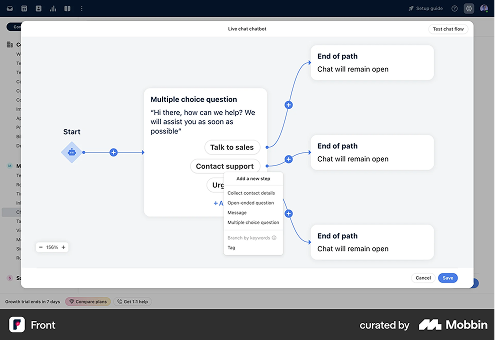
System Visualization
Defining the Experience
The research defined the goal. The next challenge was finding an interaction model that could explain autonomous AI without overwhelming users.
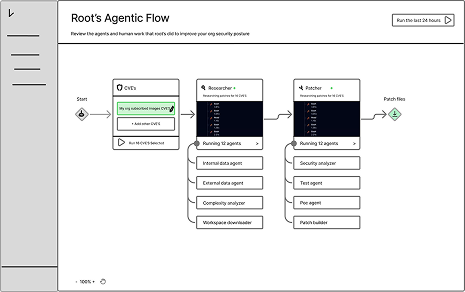
Early explorations - Exploring different interaction models before committing to a workflow.
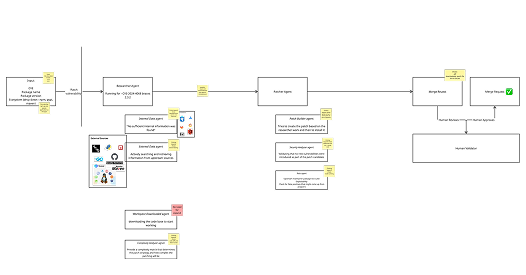
Mapping the workflow - Translating real agent data into a coherent remediation flow.
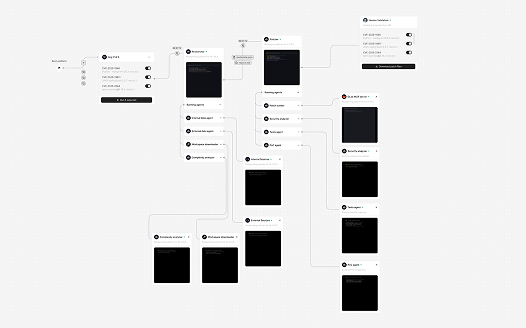
Showing multiple CVEs - We initially visualized multiple vulnerabilities moving through the workflow to emphasize autonomous activity.
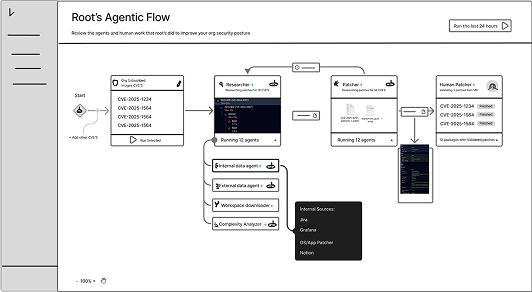
🔑 Key insight Showing more activity didn't create more understanding. Showing one complete remediation story did.
Showing more activity didn't create more understanding. Showing one complete remediation story did.
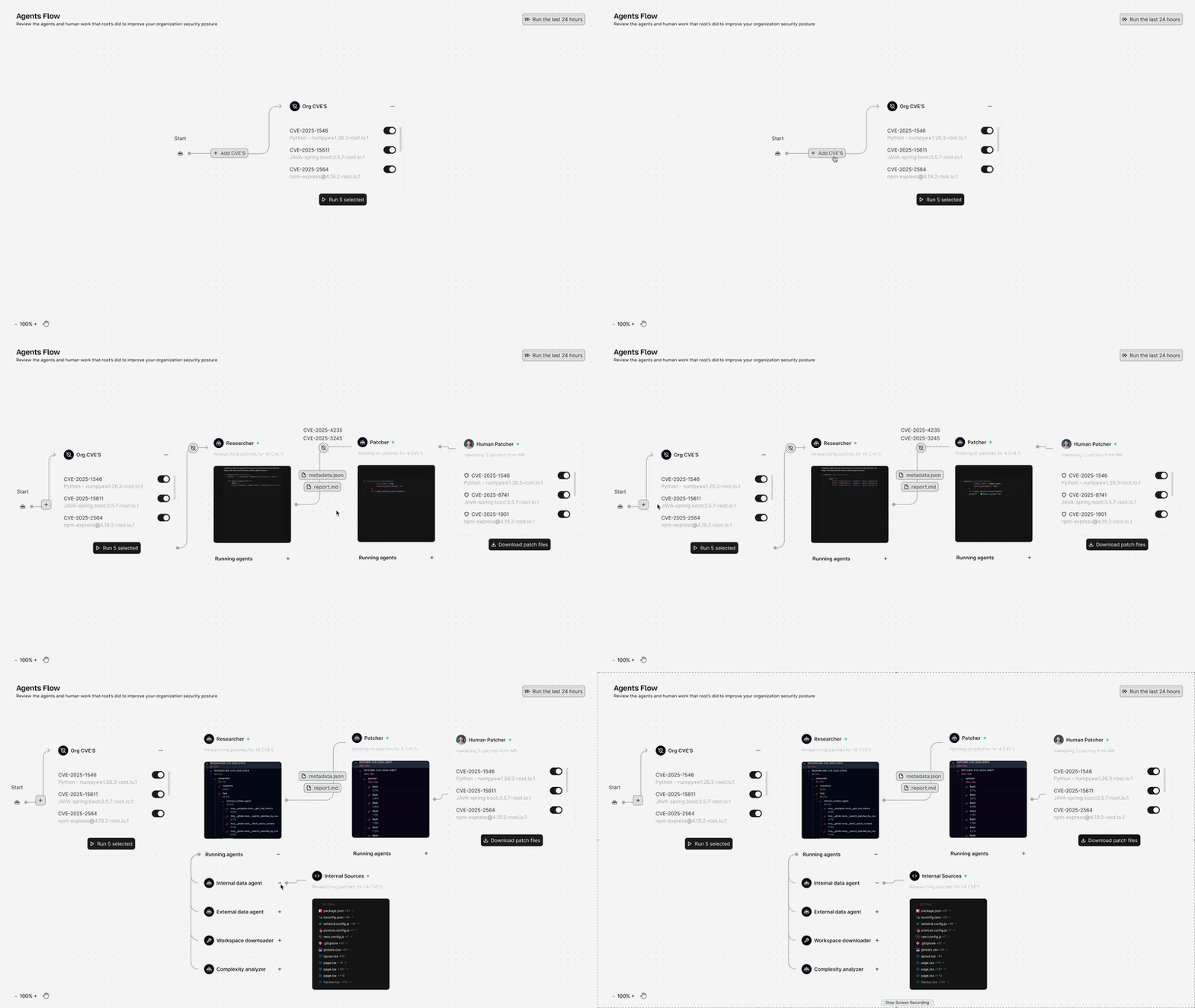
Focusing on a single CVE - Using one real vulnerability allowed users to follow the complete remediation journey without the noise of multiple concurrent workflows.
Validating the Concept
What started as an internal demo became the foundation for explaining Root's autonomous remediation system - first to customers, then across product marketing, sales, and the shipped product itself.
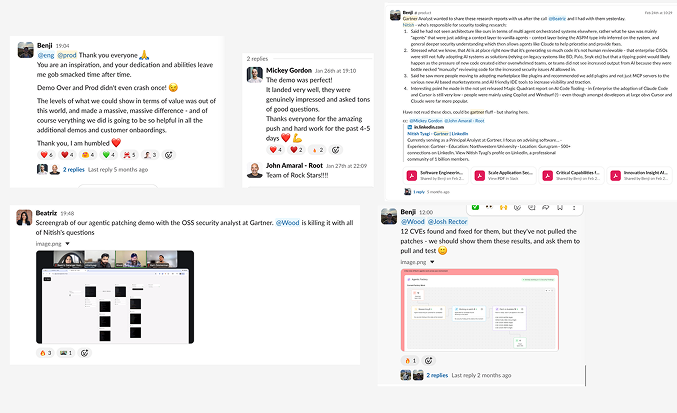
Positive feedback from customers, sales, leadership, and analysts validated the interaction model, leading to its adoption across product demos, marketing materials, and the production experience.
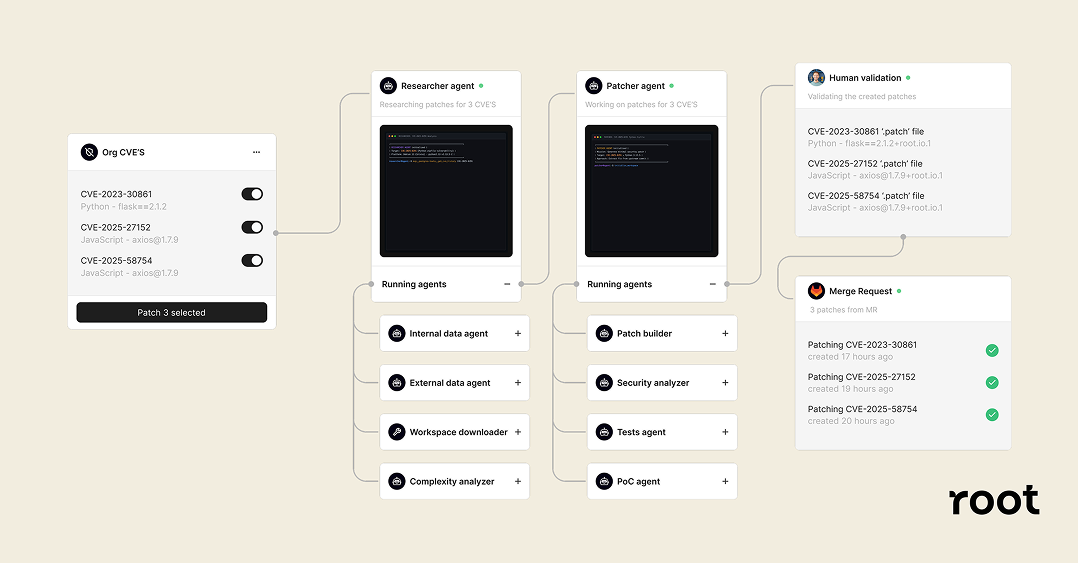
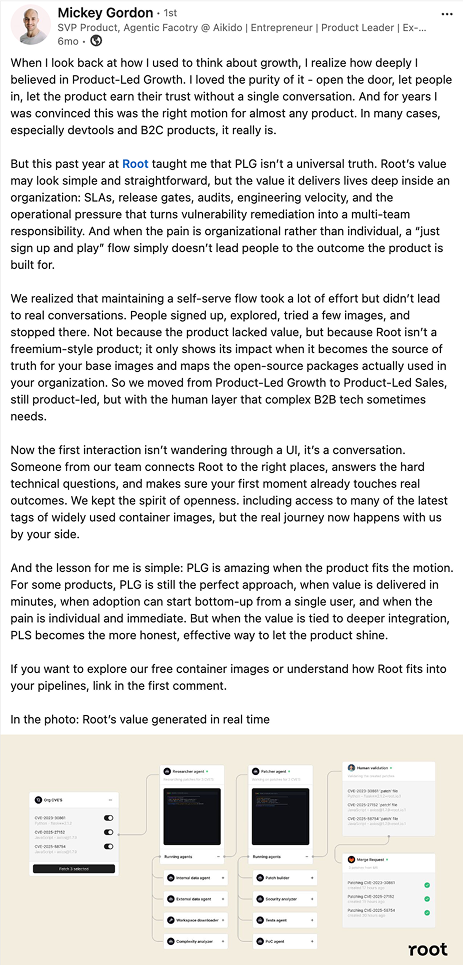
The original internal demo that introduced the autonomous remediation concept.
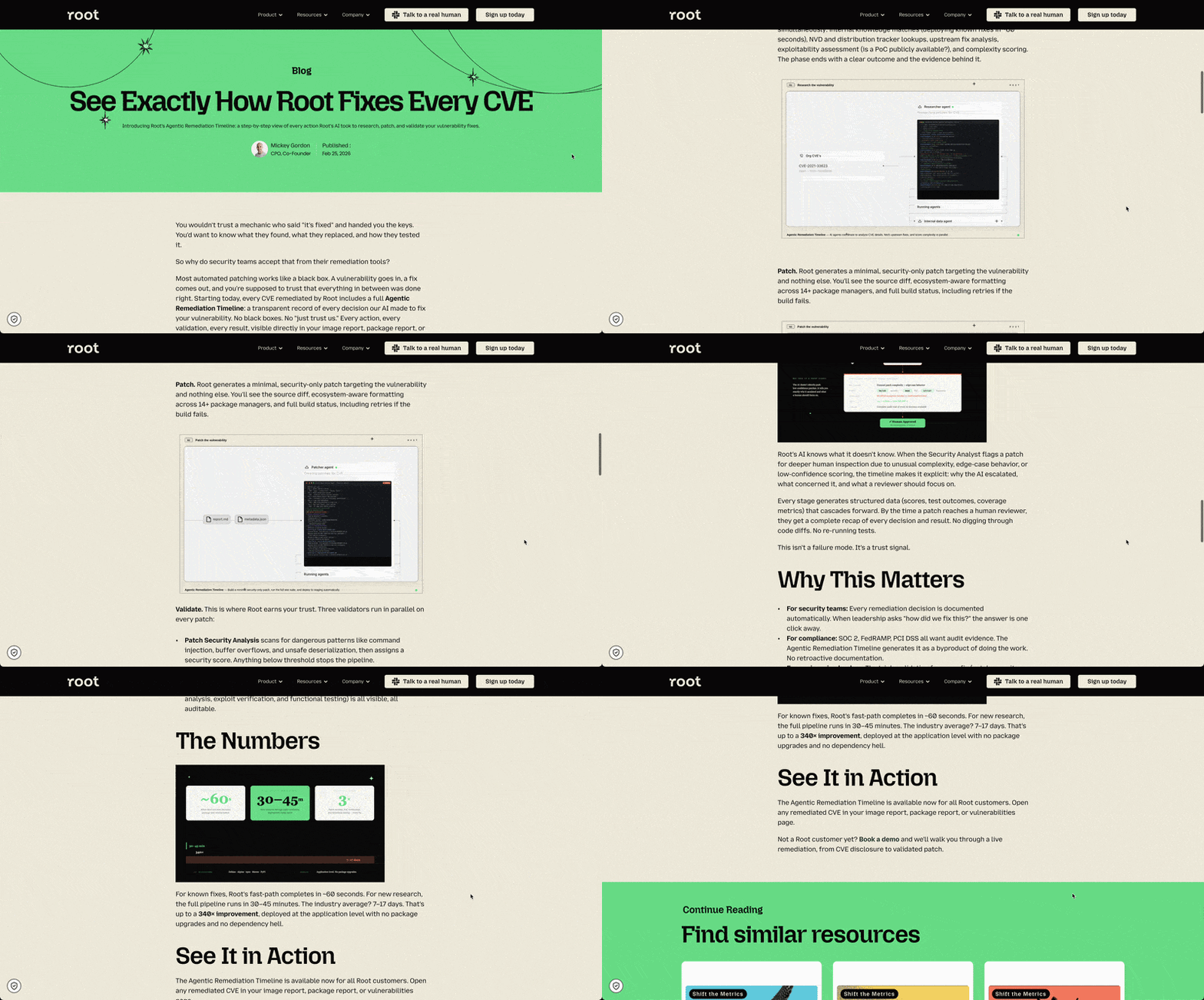
The interaction model became part of Root's official product launch, featured in the company blog to explain how the autonomous remediation process works.
The interaction model was featured across company blog posts and LinkedIn announcements, with animated walkthroughs explaining each agent's role.
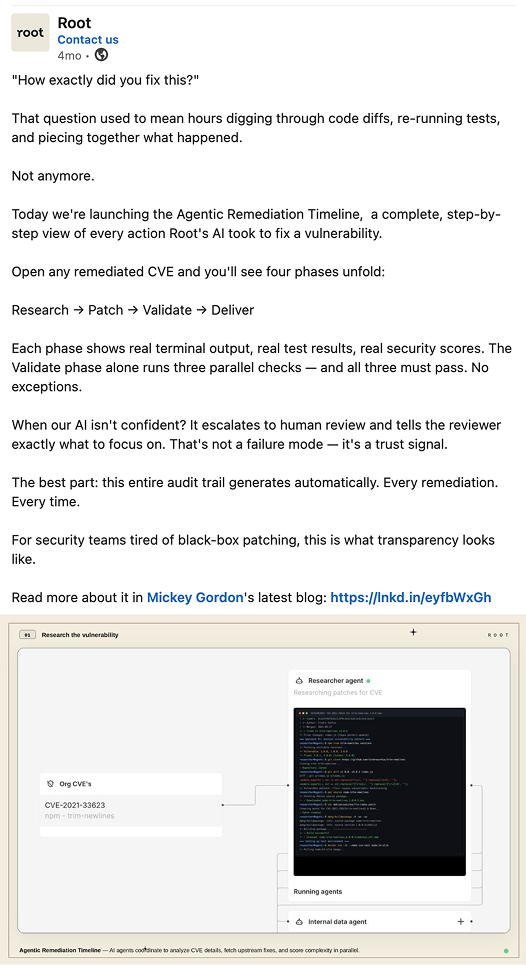
.gif)
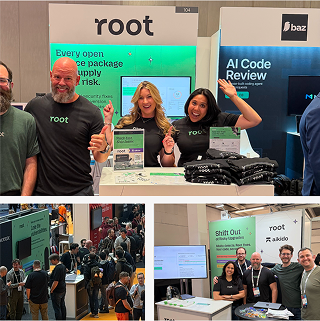
The concept was used in customer demos, analyst briefings, internal discussions, and industry events.
Evolving the
Interaction Model
Launching the feature:
Launching the feature wasn't the end of the project. As Root's autonomous remediation expanded across an organization's assets, the interaction model continued evolving - from explaining a single remediation to providing visibility into autonomous AI workflows running across the entire environment.
.gif)
From Prototype to Product - The original interaction model became the production experience for understanding how a single vulnerability was researched, patched, validated, and delivered.
Reflection
Project Hindsight:
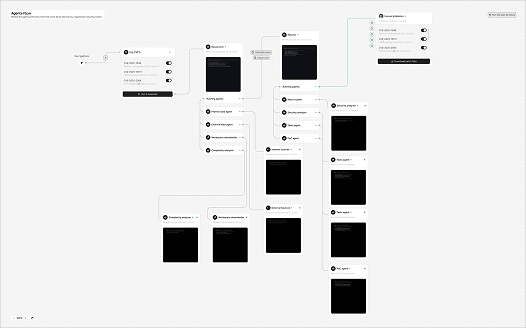
Scaling Beyond a Single CVE - The interaction expanded from explaining a single remediation to visualizing autonomous AI workflows across the organization's assets.
This experience later proved valuable when working on other dashboards, emphasizing the importance of enabling users to create and customize, as confirmed by subsequent usability tests.
.gif)
Scaling Beyond a Single CVE - The interaction expanded from explaining a single remediation to visualizing autonomous AI workflows across the organization's assets.
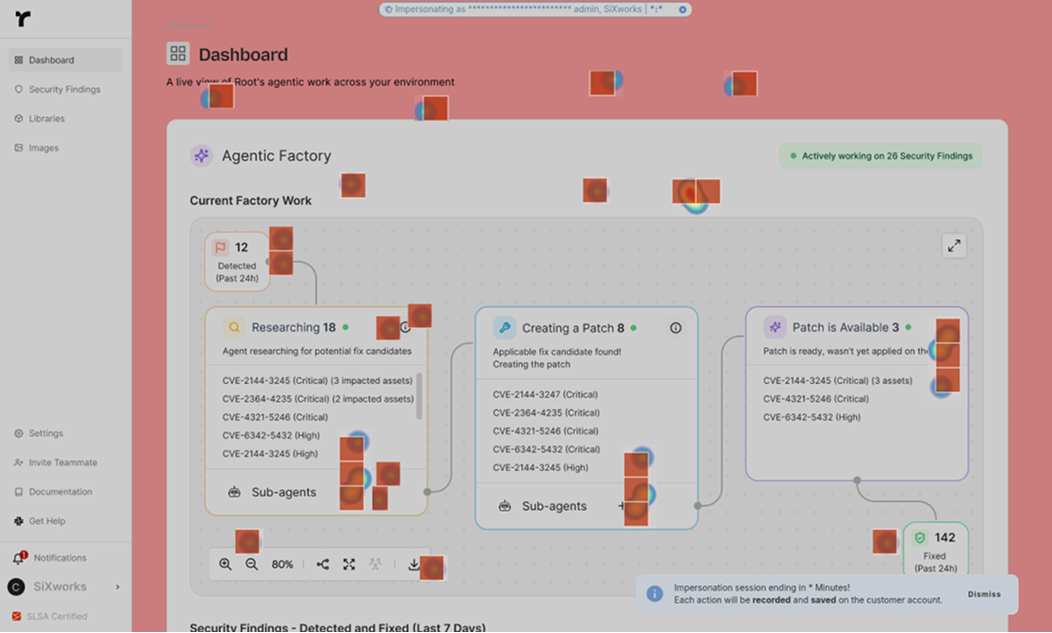
Learning from Real Usage - Product analytics revealed that users rarely interacted with the initial dashboard. Heatmaps and usage patterns helped identify what users actually needed while monitoring autonomous remediation, leading to a more focused experience.
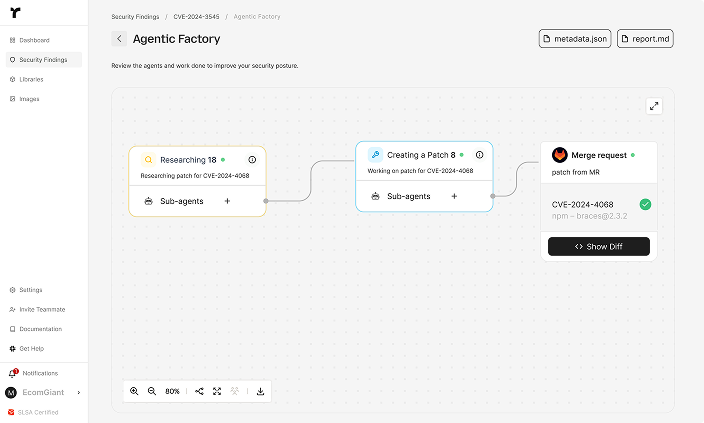
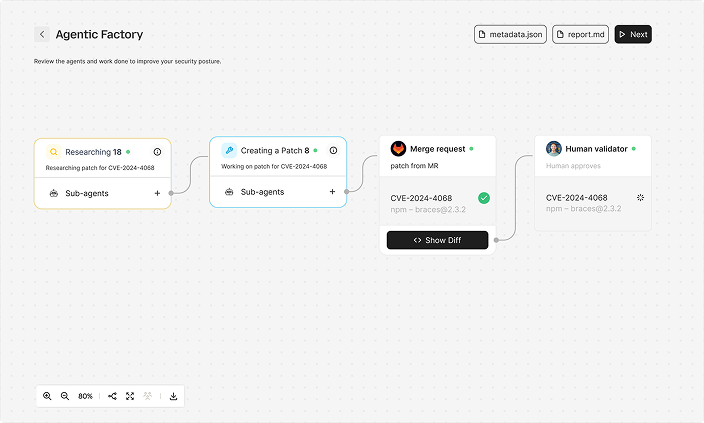
A Shared Interaction Language - The project stopped being about individual screens. Improvements introduced in the Agent Factory influenced the original CVE experience, while refinements from the CVE workflow continued shaping the dashboard. Both evolved together into a shared interaction language.
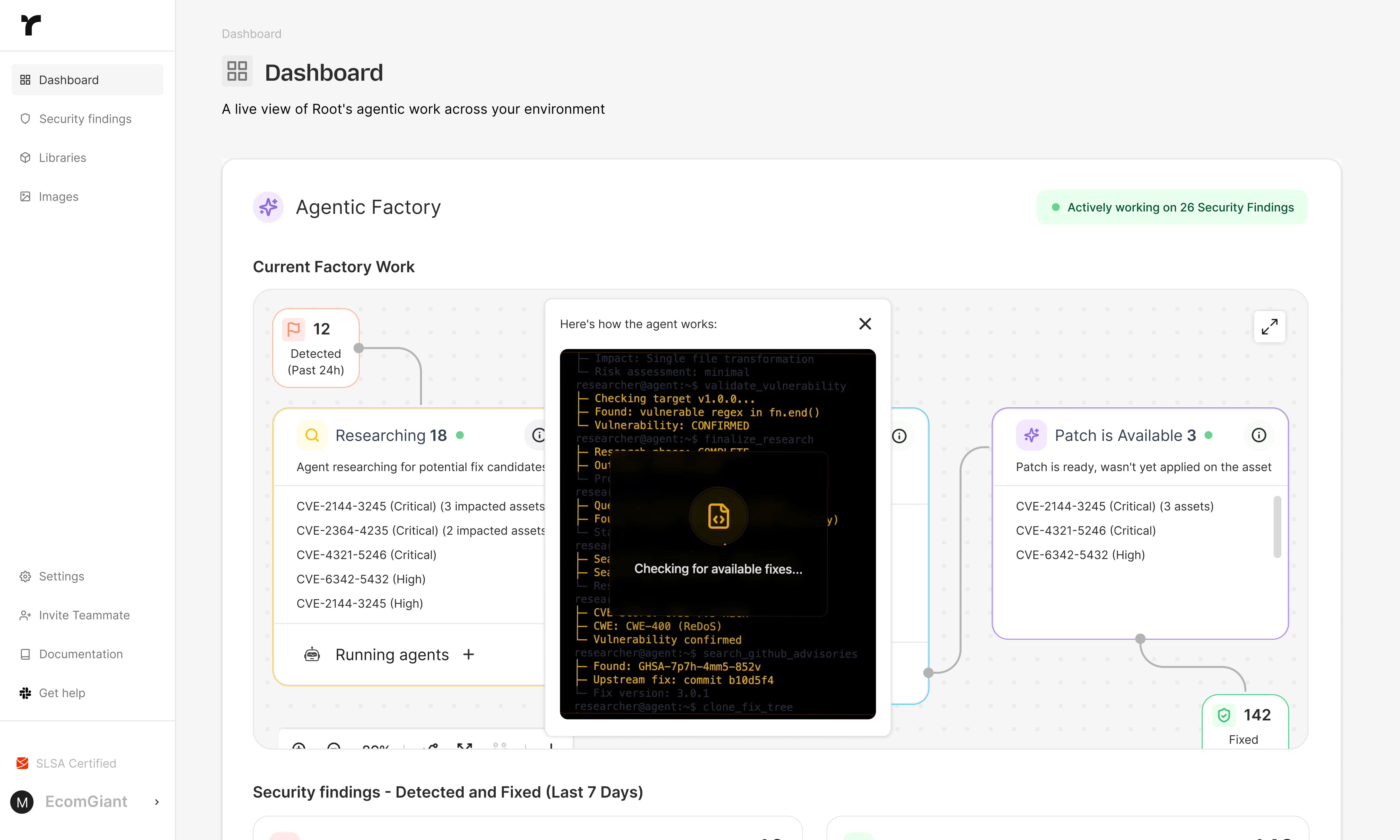
Final Experience - A unified interaction model for understanding autonomous remediation - from a single vulnerability to organization-wide AI activity.
Reflection
Simplicity fosters understanding. Reducing visual complexity while revealing details progressively made autonomous AI easier to trust.
A small interaction evolved into a shared language across multiple product experiences, proving that solving one focused problem can influence an entire platform.
The hardest challenge wasn't designing the flow - it was distilling dozens of agents and technical details into something that still felt effortless.
Looking back, I'd continue exploring how this interaction could become more than a visualization, allowing users to inspect, review, and collaborate with autonomous workflows.
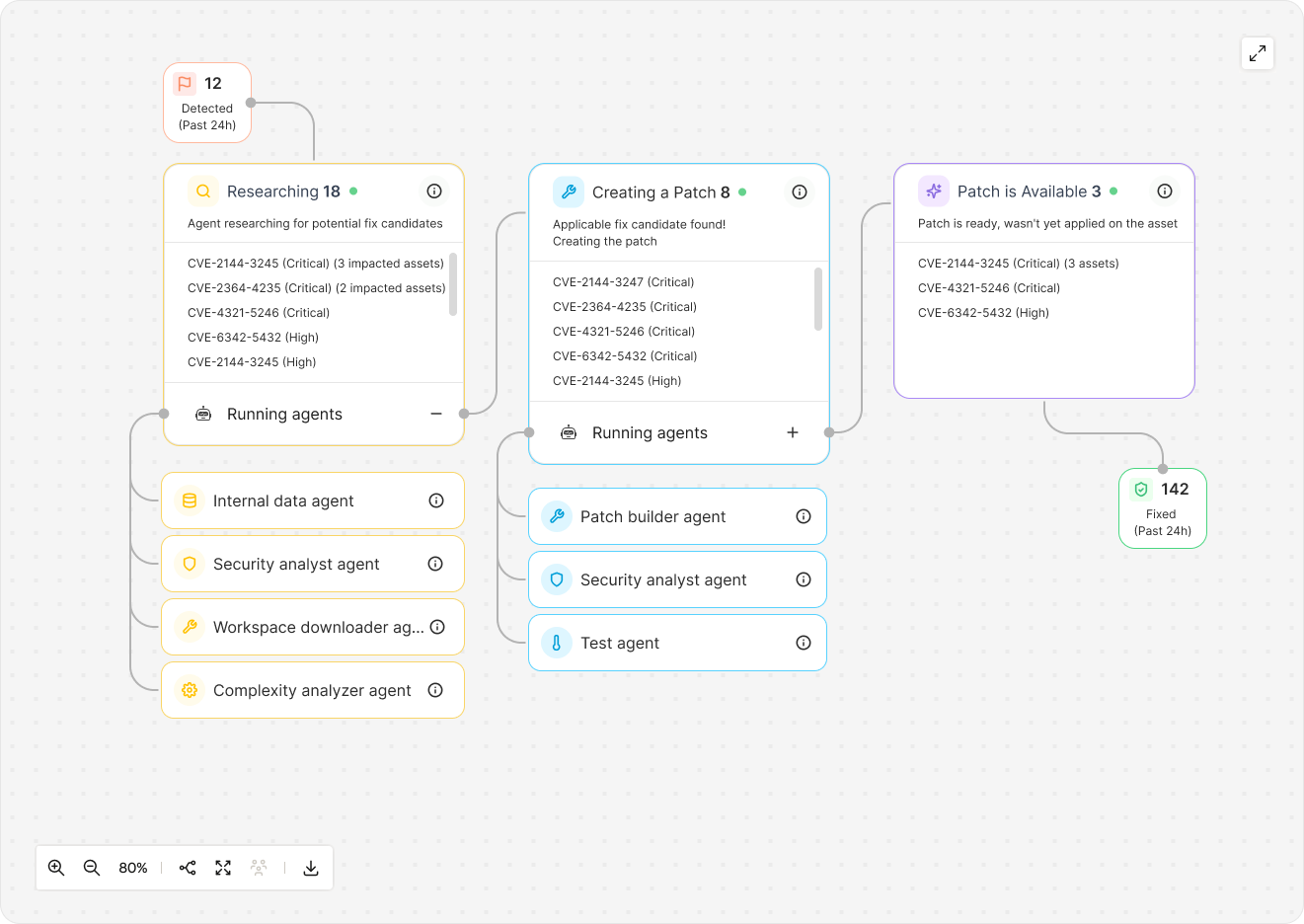
The feature's biggest success wasn't the interaction itself - it was making an autonomous AI system understandable enough that the technology could explain itself.
Next
Case